✓ Royal Mail Authorised Inspector since 2008 | Trading since 2005


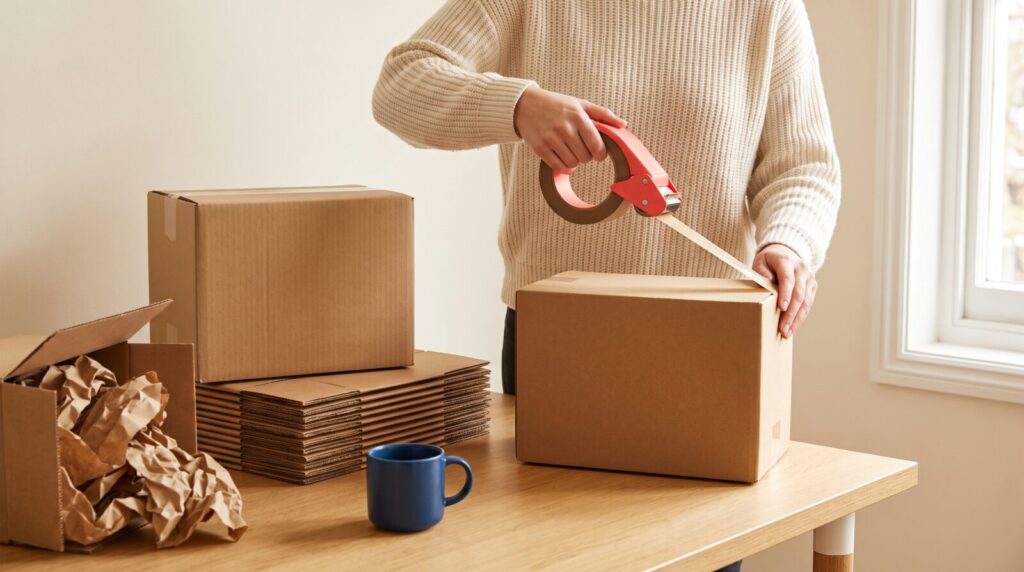
Single wall boxes have one layer of corrugated fluting and suit most everyday parcels up to around 10kg that are not especially fragile. Double wall boxes have two layers of fluting, are typically 4.6mm to 5mm thick, and are the better choice for heavy, fragile, valuable or stacked items. If you are unsure, start with the weight, fragility and journey of what you are sending, then pick the lightest box that will protect it.
Key takeaways
- Single wall = one fluted layer between two liners. Lighter, cheaper and ideal for most standard parcels.
- Double wall = two fluted layers between three liners. Stronger, more crush-resistant and better for heavy or delicate goods.
- The box itself counts towards the weight you pay postage on, so do not over-specify for light items.
- Royal Mail size limits still apply: a Small Parcel is up to 45 x 35 x 16cm and 2kg, a Medium Parcel up to 61 x 46 x 46cm and 20kg.
- Whichever box you choose, the right size, void fill and taping matter as much as the board.
What is the difference between single wall and double wall boxes?
Every corrugated cardboard box is made from the same basic ingredients: flat sheets of paper called liners, and a wavy middle layer called the fluting. The fluting is what gives cardboard its strength, acting like a row of tiny arches that resist crushing.
- A single wall box has one layer of fluting sandwiched between two liners. It is the most common type of postal box in the UK.
- A double wall box has two layers of fluting and three liners, bonded together into one thicker sheet. The extra layer adds stacking strength, puncture resistance and protection against knocks.
You can usually tell them apart by looking at the cut edge of a flap. One wavy line means single wall. Two stacked wavy lines means double wall.
Single wall vs double wall at a glance
| Feature | Single wall | Double wall |
|---|---|---|
| Construction | 1 layer of fluting, 2 liners | 2 layers of fluting, 3 liners |
| Typical board thickness | Around 3mm to 4mm | Around 4.6mm to 5mm (Mailcoms double wall boxes are 4.6mm or 5mm) |
| Typical contents | Clothing, books, trainers, homeware, boxed products | Heavy tools, glass, ceramics, electronics, bulk stock |
| Rough weight guide | Up to around 10kg | Heavier loads, and anything that will be stacked |
| Box weight | Lighter, so less added to your postage weight | Heavier, which can push a parcel into a higher weight band |
| Cost | Lower | Higher |
| Storage | Flat-packs compactly | Takes up more space when flat |
When should you use a single wall box?
Single wall is the everyday workhorse for most businesses sending parcels through Royal Mail. Choose single wall when:
- Your item weighs less than around 10kg.
- The product is not fragile, or it is already in its own retail packaging.
- The parcel is going straight to the customer rather than being stacked on a pallet or stored for long periods.
- You are sending as a Small Parcel and every gram counts towards the 2kg limit.
Typical examples include clothing, shoes, books, soft furnishings, toiletries and most small boxed products. Many single wall boxes are also multiscored, meaning they have extra creases on the corners so you can cut the box down to a shallower depth. That is handy for keeping a parcel inside a Royal Mail size band without stocking dozens of box sizes.
Browse our single wall cardboard boxes, including Royal Mail PiP-friendly sizes.
When should you use a double wall box?
Double wall boxes cost a little more and weigh a little more, but they earn their place when protection matters. Choose double wall when:
- The contents are heavy, such as tools, machine parts, bulk paper or multiple products in one box.
- The item is fragile or valuable, such as glassware, ceramics or electronics.
- Boxes will be stacked during transit or in storage, where the bottom box takes the weight of everything above it.
- The parcel has a long or rough journey, such as international shipping or multiple handling points.
- You are reusing the box for returns, archiving or repeat deliveries.
See our range of double wall cardboard boxes for heavier and more delicate goods.
How box choice affects your postage costs
Royal Mail prices parcels by size and weight, and the weight of the packaging counts. A heavier double wall box can be the difference between staying inside a weight step and moving up to the next one, especially close to the 2kg limit for a Small Parcel.
Before you settle on a box, check three things:
- Size: a Small Parcel can be up to 45 x 35 x 16cm, and a Medium Parcel up to 61 x 46 x 46cm. Our Royal Mail size guide explains where the lines fall.
- Weight: weigh the packed parcel, including the box, void fill and tape, not just the product.
- Box size vs contents: a box that is much bigger than the item adds weight, needs more void fill and lets the contents move about.
If you send parcels regularly, a franking machine with built-in scales takes the guesswork out of weight and lets you print postage onto a label for each parcel. Find out more about our franking machines, or read about which packaging works best with a franking machine.
How to choose the right box in 4 steps
- Weigh and measure the item. Note its weight and its longest, widest and deepest points.
- Judge how fragile it is. Could it break, dent or scratch if the box is dropped or squeezed? If yes, lean towards double wall.
- Think about the journey. A short trip to a UK customer is easier on a box than stacking, storage or international transit.
- Pick the smallest box that leaves room for protection. Aim for a few centimetres of space on each side for void fill, then check the packed parcel against the Royal Mail size and weight limits.
Packing tips that make any box stronger
- Fill the gaps. Empty space lets items move and lets the box collapse under pressure. Use void fill and bubble wrap to stop movement.
- Tape it properly. Use the H-taping method: one strip along the centre seam and one across each edge seam, top and bottom. A good 48mm packaging tape holds far better than general office tape.
- Put heavy items at the bottom. When packing several items together, the heaviest go in first, with lighter items on top.
- Keep the label area flat. Stick your address and postage label on the largest flat face, away from seams and tape joins, so it scans cleanly.
- Do not overfill. A bulging box is weaker, may not fit the size band, and can split along the seams.
Are single wall and double wall boxes recyclable?
Yes. Both types are made from paper-based corrugated board and can go in standard cardboard recycling once tape and labels are removed where possible. Our cardboard packaging is made from FSC certified materials, and choosing a single wall box where it will do the job also means less material per parcel. Visit our packaging supplies page to see our eco-friendly options.
Need help choosing?
If you are not sure which box suits your products, our team is happy to help. Call Mailcoms on 01543 572 776 or browse our full range of mailing boxes and cartons.
Frequently asked questions
Is double wall cardboard stronger than single wall?
Yes. A double wall box has two layers of corrugated fluting instead of one, which makes it more resistant to crushing, puncturing and stacking pressure. It is the better choice for heavy, fragile or valuable items.
How much weight can a single wall box hold?
As a rough guide, a single wall box is suitable for items up to around 10kg, depending on the box size and how well it is packed and taped. For heavier loads, or boxes that will be stacked, use double wall.
Can I send a double wall box as a Royal Mail Small Parcel?
Yes, as long as the packed parcel is no larger than 45 x 35 x 16cm and weighs no more than 2kg in total, including the box, void fill and tape. Double wall boxes weigh more, so check the total weight carefully.
How can I tell if a box is single wall or double wall?
Look at the cut edge of a flap. A single wall box shows one wavy line of fluting between two flat liners. A double wall box shows two stacked wavy lines, and the board is noticeably thicker, typically 4.6mm to 5mm.
Is a double wall box worth the extra cost?
It is when the contents are heavy, fragile, valuable or will be stacked, because the cost of a damaged item or a return is usually far higher than the difference in box price. For light, robust items, a single wall box does the job for less and keeps postage weight down.